History
From Marcel and Madeleine Brault to Orriule
Birth of a place, family transmission, then rebirth — since 1960.
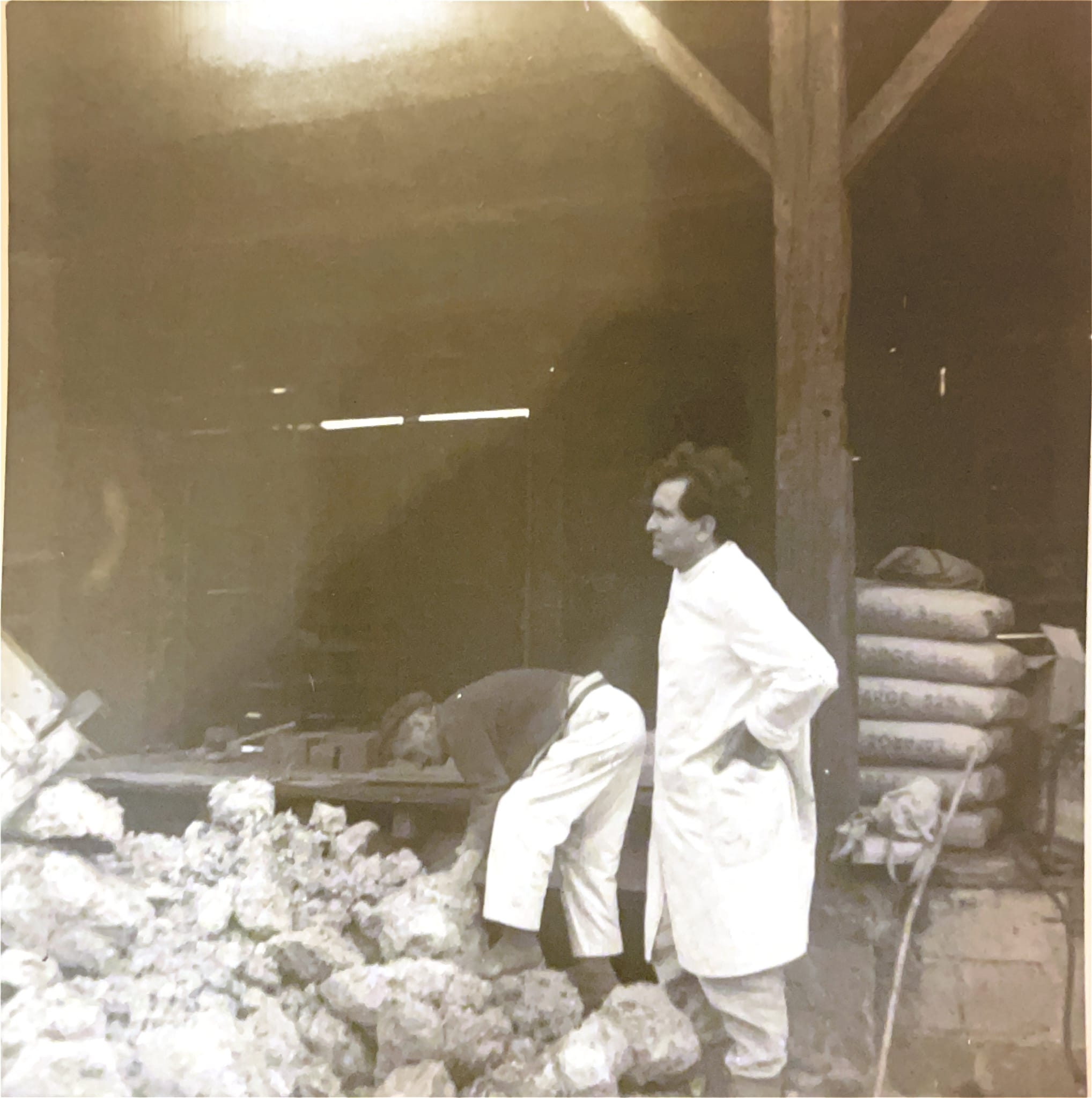
The story of the poterie du colombier (that was the name initially, later becoming poterie de la colombe) began with the meeting of two men in 1958 in Morocco: Marcel Brault, who at the time was director of a Moroccan daily newspaper, and Claude Pantzer, a young modernist ceramist, traveler, and collaborator of Charlotte Perriand.

In the lounges of a hotel in Rabat, Marcel made a decisive encounter. That day, Claude Pantzer was exhibiting his works. Marcel and Claude talked, met again, and a friendship was born.
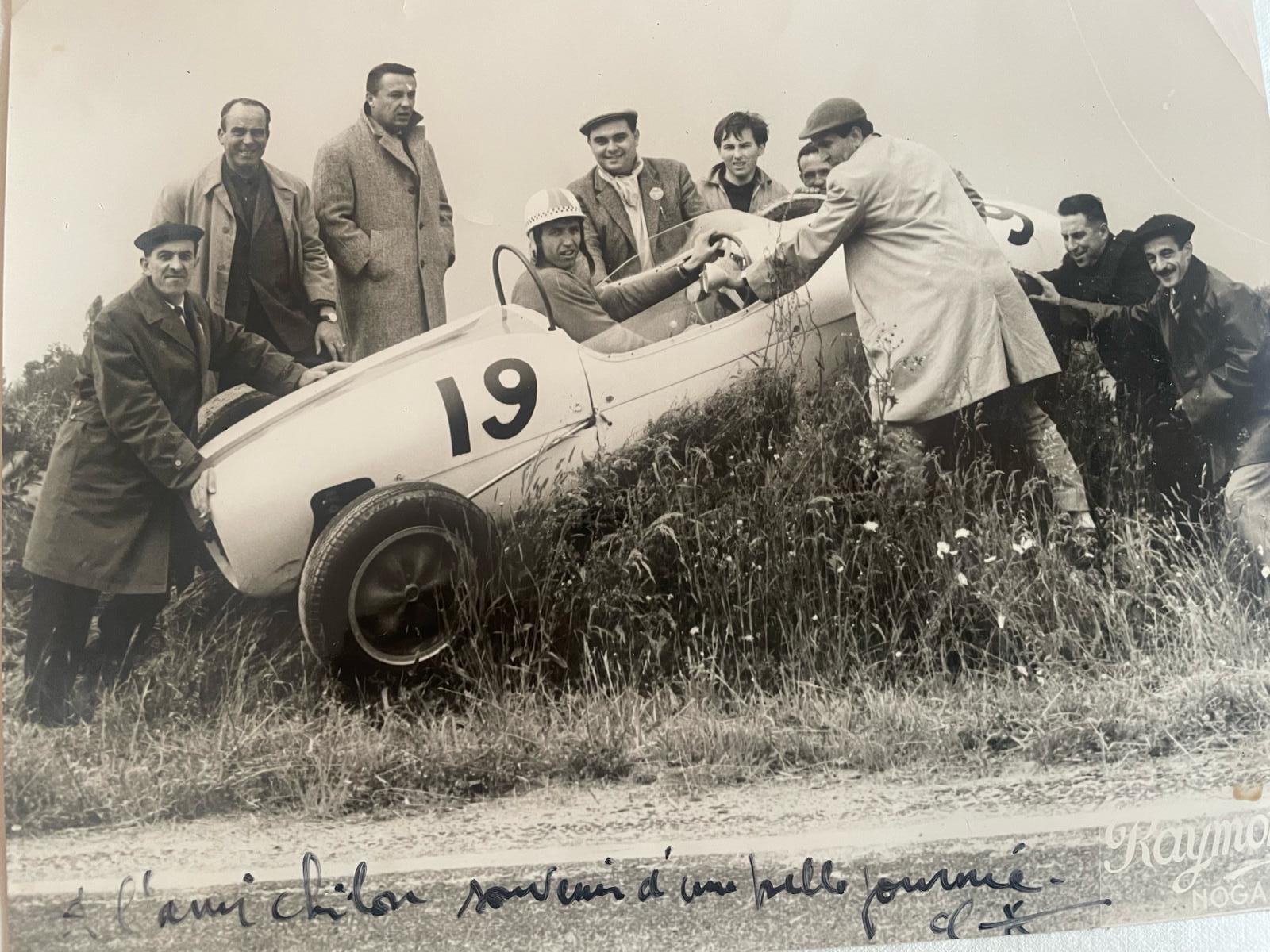
Claude drove a 2CV. Marcel drove a Jaguar. Marcel passed on his love of fast cars to Claude.
But Claude brought another gateway: ceramics. He trained Madeleine in the art of glazes. Pigments, recipes, thicknesses, tests, kiln surprises, mastery of firing… This know-how would become one of the signatures of the house.
In 1960, Marcel and Madeleine Brault left Morocco with their family and decided to settle in the farm they had bought shortly before in Orriule and to create a pottery workshop with Claude Pantzer as their "master".
Then began a period of labor where Marcel and Madeleine learned everything about the basics of ceramics.
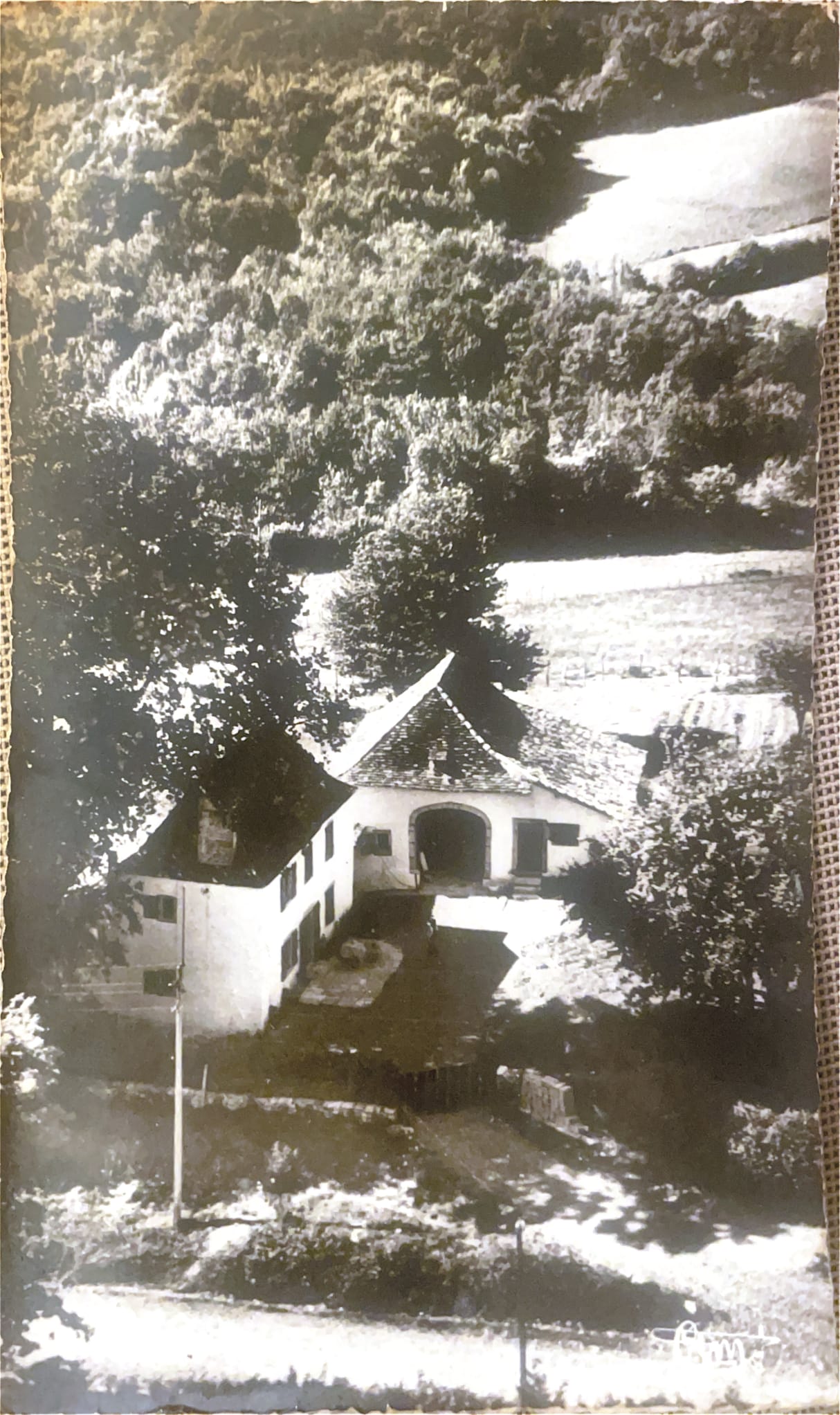
Barely settled in Orriule, Marcel and Madeleine received a remarkable visit: the last potter from the neighboring village of Laàs came to see them. He told them that around Orriule, there was a precious resource: white clay, present in the commune, which could serve them.
This discovery was a decisive starting point. It would also open the way to future tile production.
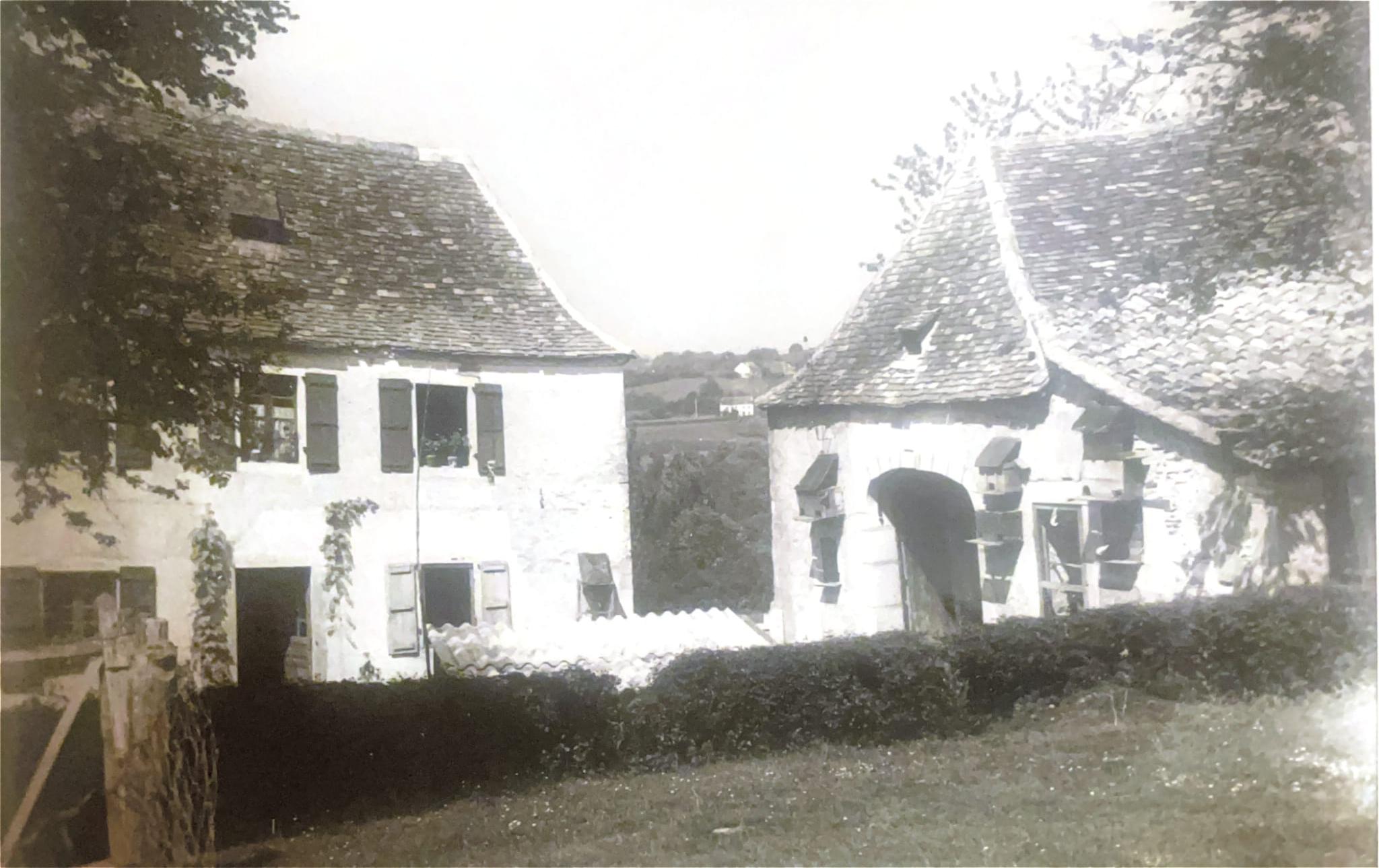
Marcel and Madeleine first started making pottery. But at first, it didn't take off: sales didn't follow.
They then began making tiles — initially just for their own house, with this local material. The result was pleasing. Word of mouth did the rest: quickly, potential customers asked for tiles for their own homes.
To meet the demand, Marcel and Madeleine hired farmers from the village. The activity grew to employ about 50 people.

With Claude Pantzer, the idea oriented towards ceramic tile and mosaic production. Pigments, compositions, firings: the know-how was put in place.
Projects multiplied: hotels, official buildings, private homes. A dynamic was established.
Claude Pantzer died during a car race in 1962, shortly after the start.
Without Claude, Marcel and Madeleine continued nonetheless. They kept the place alive through work and perseverance.
The workshop had grown very quickly, and this growth brought technical problems. To secure the activity, Marcel approached his biggest client: Maison Carré in Paris, around 1968.
Thanks to this proximity, Marcel and Madeleine also rubbed shoulders with Roger Capron, a renowned ceramist. Collaborations were set up, notably around projects for the Byblos hotel in Saint-Tropez.
Later, the Carré company would take over part of the artisanal activity.
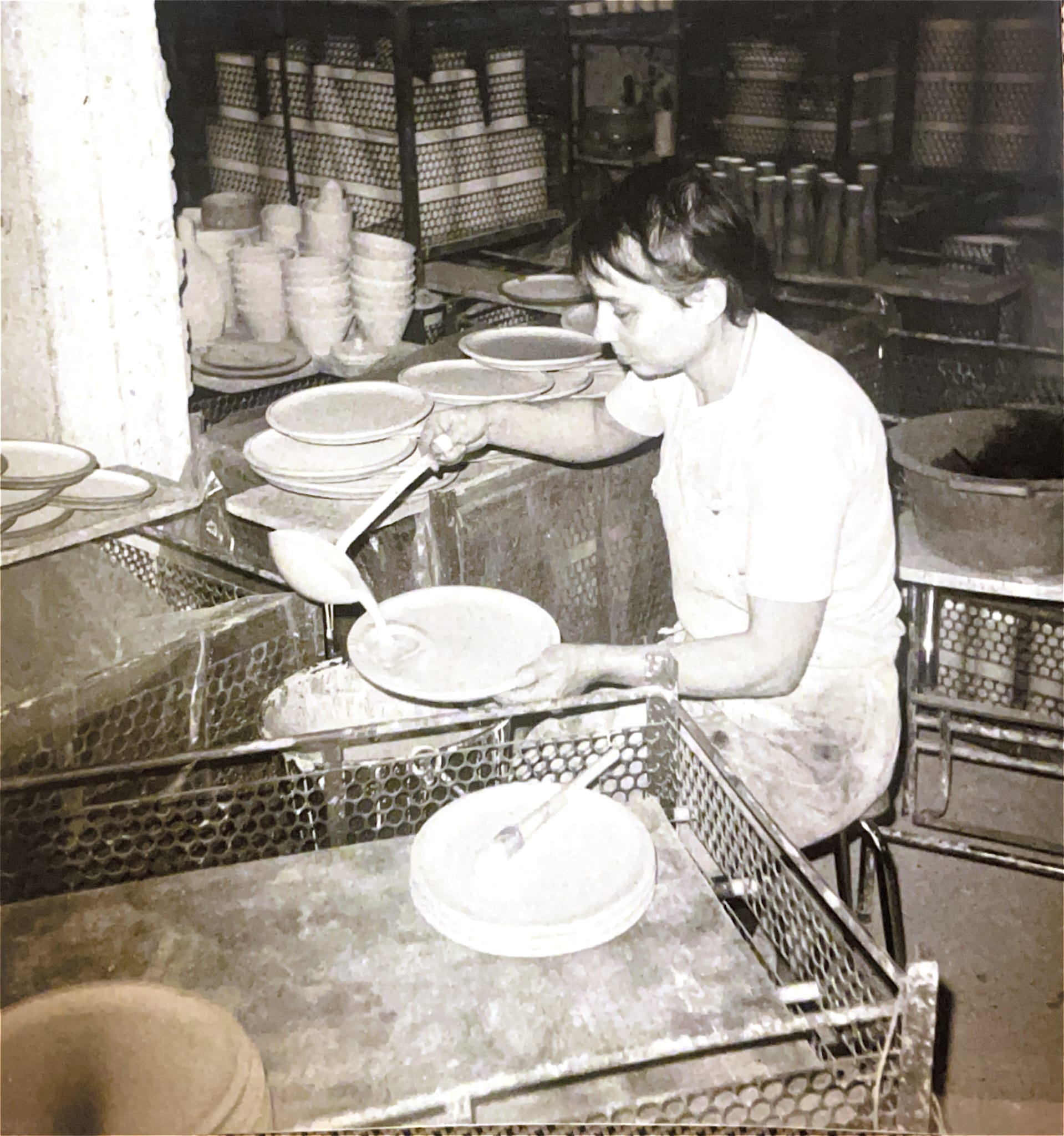
Madeleine drew closer to what would become the soul of the site: pottery. Her taste for pigments and her mastery of glazes were fully expressed. The workshop eventually took her name: Poterie de la Colombe.
Madeleine made color a language. Pottery offered her freedom: forms, surfaces, nuances, and that unexpected part that fire reveals.
Creations: Plates, Bowls, Dishes, Vases, Cups, Jars, Basins, Art Objects
The "Chinese blue" — a deep blue, the common thread of Madeleine's work.
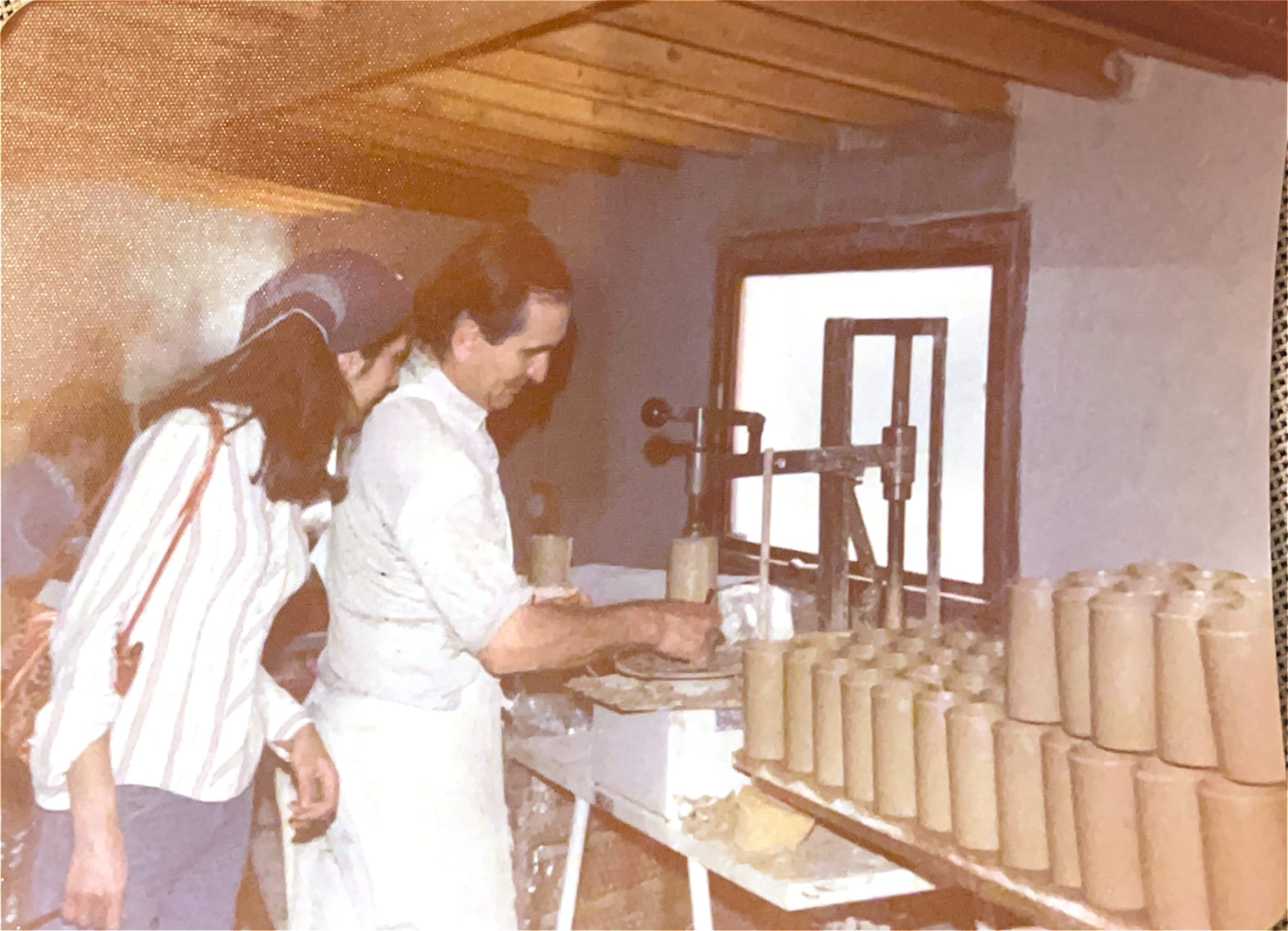
The 1970s were flourishing: pottery developed strongly, in semi-industrial craftsmanship — with machines, some of which still exist on site.
Poterie de la Colombe then went beyond the local framework: part of the production was exported, notably to the United States and Germany.
Key figures: ~20 Employees · Export USA 🇺🇸 · Export Germany 🇩🇪
Distribution: Sales were made through several galleries and stores, particularly in Vallauris and Saint-Jean-de-Luz, Seignosse and Paris.
Around 1978, rising energy costs — in the context of the second oil shock — began to weigh on the activity. Pottery and firing became more expensive, balances tightened, and adaptation was necessary.
In the 1980s, interest in French crafts decreased and activity declined in volume, despite demand that remained real among retailers.
Yet the passion remained intact. Marcel continued to throw, and Madeleine to glaze — notably the large flat plates, a success of the pottery.
This is where Benoît Brault entered the scene, the youngest son of Marcel and Madeleine Brault. He decided to take over the family adventure. He created Formes & Décors Céramiques and developed important advances in decalcomanias ("chromos") and technical ceramic formulation.
While safeguarding the physical, intellectual and emotional heritage built by his parents.
Sophie, Marcel and Madeleine's first daughter, imagined a series that became a classic: "Les Jardins de Sophie" — a series of chromos with blue and white designs, allowing to "put the garden on your plate".
These pieces delighted many visitors to the factory store in Orriule.
Today, Benoît returns to the path of clay: reworking pigments, returning to best sellers, and relaunching artisanal production of iconic pieces.
A selection of references in Chinese blue, Madeleine's favorite pigment.
Poterie de la Colombe comes back to life: through hand, color, and transmission.